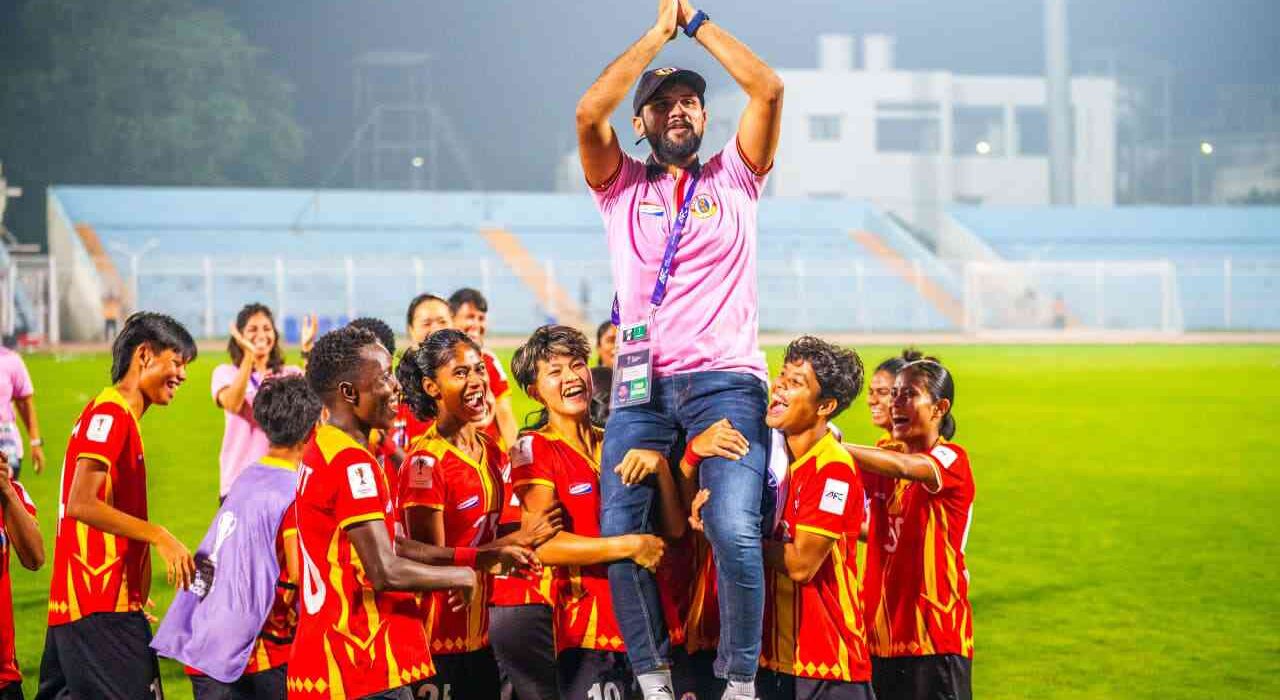
After East Bengal’s historic AFC Women’s Champions League campaign, Anthony Andrews believes Indian women’s football needs a longer and more competitive domestic league to develop players and compete at the continental level.
Kolkata, November 11: Indian women’s football is entering another important phase. The 2026–27 Indian Women’s League (IWL) is set to begin on November 13 within just two days, with a new three-phase format taking the competition across three different cities. While the change brings a different approach to organising the country’s top-tier women’s club competition, there is a bigger question that continues to surround the development of the game, Is the current league structure giving players enough opportunities to grow?
For East Bengal Women’s head coach Anthony Andrews, the answer lies in playing more football.
Andrews has had a memorable few months with East Bengal Women. Having guided the Kolkata side to the Indian Women’s League title consecutively, he also took his team compete on the continental stage in the AFC Women’s Champions League. East Bengal’s journey into the quarter-finals, securing a place among the top eight clubs in Asia, offered Indian women’s football a glimpse of what could be achieved with the right platform.
But following that experience, Anthony believes the domestic structure needs to move forward if Indian clubs are to regularly compete at that level.
“There will be more teams in the IWL, there will be more teams and more games,” Anthony said, pointing towards the need for a bigger and more competitive league.
He also referred to South Korea’s women’s football structure, where clubs play each other four times in a season despite having only eight teams.
The comparison was not merely about the number of participating clubs. For Anthony, it was about the importance of regular competition.
“In women’s football, we just want to organise tournaments for the sake of organising tournaments. The sooner you finish, the better,” he observed.
It is a concern that goes beyond the number of matches on the calendar. A league cannot develop its players simply by bringing clubs together for a short competition. Players need consistent match exposure, coaches need time to build their teams, and clubs need a structure that allows them to plan beyond a few weeks of football.
Anthony believes that unless this approach changes, expecting Indian clubs to regularly produce better players and compete against established Asian sides will remain a difficult task.
“If we stop this, then things will happen. Then you can expect good things happening from each club. And then you will have better players in the country as well,” he added.
Three phases, but is that enough?
The upcoming IWL will be organised across three phases in three different cities, Kolkata, Jamshedpur, and Bengaluru, bringing a new format to the competition. However, Anthony also highlighted the difficulties that such a structure can create for coaches and players.
“Now we have only three phases. 15-20 days and then 15-20 days and then three phases. It’s very difficult. Very difficult for the coach to plan, for the players to play,” he explained.
For a coach, preparing a team for a competition spread across different phases is not an easy task. Maintaining rhythm, managing player fitness and keeping the squad competitively sharp become important challenges when the playing schedule is broken into short periods.
More importantly, players need continuity. A longer and more consistent league would give them the opportunity to develop through regular competitive football rather than depending on short tournament windows.
The arrival of new stakeholders could bring fresh possibilities, but Anthony believes that the responsibility of improving the league cannot rest with one organisation alone. Clubs, the All India Football Federation and other stakeholders need to work together to create a sustainable structure.
The AFC Women’s Champions League experience showed what is possible.
East Bengal Women’s continental campaign also gave Anthony Andrews another reason to emphasise the importance of having a strong domestic league.
During the AFC Women’s Champions League, the team experienced the atmosphere of continental football, with supporters turning up to back them. For Anthony, that support was just as important as what happened on the pitch.
He took the opportunity to thank the AIFF for organising the competition and providing East Bengal with the platform to compete against some of Asia’s best clubs.
“If you see 70 minutes, the players were dead on the pitch. They were giving life. What made the difference? The fans,” he said, reflecting on the support his team received.
Even a crowd of around 100 supporters chanting for the team made a difference, according to the East Bengal coach.
That experience underlined another important aspect of women’s football, opportunities to play at a higher level can create a connection between clubs, supporters and the wider football community.
But such opportunities must begin at home.
Anthony also connected the development of the IWL with the future of the Indian national team.
Read more about Indian Football