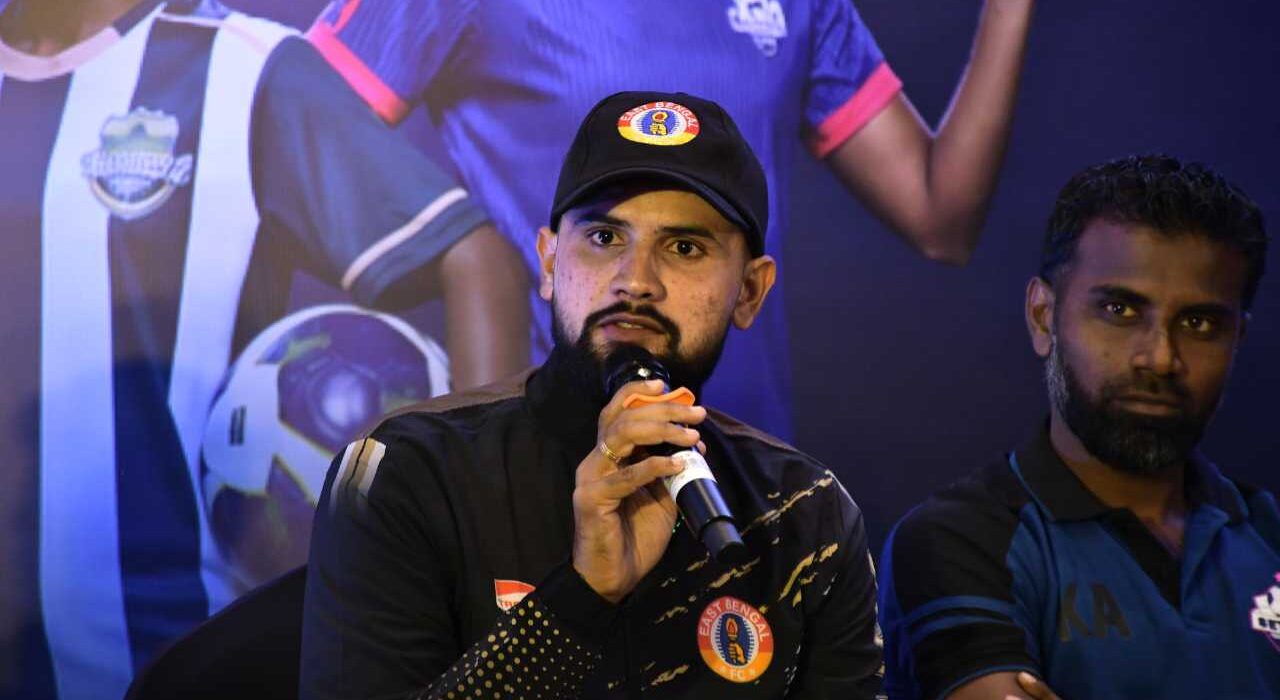
East Bengal coach Anthony Andrews questions whether 13–14 IWL matches are enough to prepare Indian players for international football
Kolkata, November 12: Indian women’s football is asking more of its players. The expectation is to compete internationally, perform under pressure and meet the standards of the national team. But how much football do they actually get to play at the domestic level before being asked to deliver on that stage?
That is the question East Bengal FC head coach Anthony Andrews has brought into focus ahead of the 10th edition of the Indian Women’s League (IWL), which begins on November 13.
Having won four IWL titles with Gokulam Kerala and East Bengal, Anthony has experienced the domestic women’s game from the perspective of a coach who has built winning teams. His latest observations, however, go beyond the usual discussion around title ambitions. He believes the structure of the competition needs to be examined more closely, particularly when it comes to preparing Indian players for international football.
The concern is not simply about the number of fixtures on the calendar. It is about the distance between the demands placed on a footballer and the competitive experience available to meet those demands.
A player cannot be expected to develop the rhythm, decision-making and consistency required at international level through limited exposure to competitive football. Yet, when opportunities at the highest level arrive, the performance of that player becomes the immediate measure of her ability.
Anthony believes that this places an unfair burden on players. Speaking ahead of the new season, he questioned whether a campaign of just 13–14 matches can provide sufficient development for footballers aspiring to represent India.
“13–14 games does not make you a better player and gives an opportunity to go and play as a national team,” he said.
His expression also raises a wider question about how the development of Indian footballers is assessed. International performances cannot be viewed in isolation from the domestic environment in which players train and compete. If the regularity and intensity of competitive matches are limited, expecting players to make an immediate impact at a higher level becomes a difficult proposition.
For Anthony, the responsibility does not rest entirely with the players. The clubs and organisers also have a role in creating an environment where footballers can develop through regular competition.
He believes that even an eight-team league could provide more playing opportunities if its format is planned with that objective in mind. Rather than treating the number of participating clubs as the only measure of progress, the competition could focus on creating a more demanding schedule.
The arrival of Capri Sports and Lxme as supporters of the league also presents an opportunity, in his view, to think about what the next stage of the IWL should look like.
Anthony was careful to acknowledge the practical difficulties involved in expanding the competition, including financial and organisational limitations. But he believes those constraints should not prevent the organisers from exploring ways to increase the number of meaningful matches.
“We just don’t want to run the league for the sake of running the league,” he said.
It is a significant distinction. The success of a domestic league should not be measured only by whether a season is completed or a champion is crowned. Its ability to prepare players for the next level should also be part of that assessment.
Anthony’s comments come from a coach who knows what winning in the IWL demands. His four titles, first two with Gokulam Kerala and subsequently with East Bengal, have established him among the competition’s most successful coaches. But his immediate concern with East Bengal FC is not about looking too far ahead.
The club enters the new season after a historic AFC Women’s Champions League campaign, reaching the quarter-finals and carrying Indian women’s club football into the latter stages of Asia’s premier competition.
For Anthony, the priority now is to manage the players’ physical condition after that demanding continental journey. He acknowledged that the team has several things to address before the domestic campaign gathers pace.
Yet, the ambition to defend the championship remains intact. “I am a hungry man to chase titles and that’s what I’ve been built and raised,” he said.
Anthony also made it clear that East Bengal would not approach the new season without the competitive edge that has defined their recent success. “We’ll be ruthless, that is for sure,” he stated.
East Bengal Women’s title defence will be one of the major storylines of the new IWL season. But Anthony’s observations have brought another discussion into the spotlight, one that extends beyond any single club’s campaign.
Indian women’s football has made progress in recent years, but the next step will require more than expecting players to deliver better performances. It will require a domestic structure that gives them the opportunity to develop, compete regularly and arrive at the international level better prepared.
The question, therefore, is not just how much Indian players are expected to achieve. It is whether the domestic game is giving them enough football to achieve it.
Read more about Indian Football