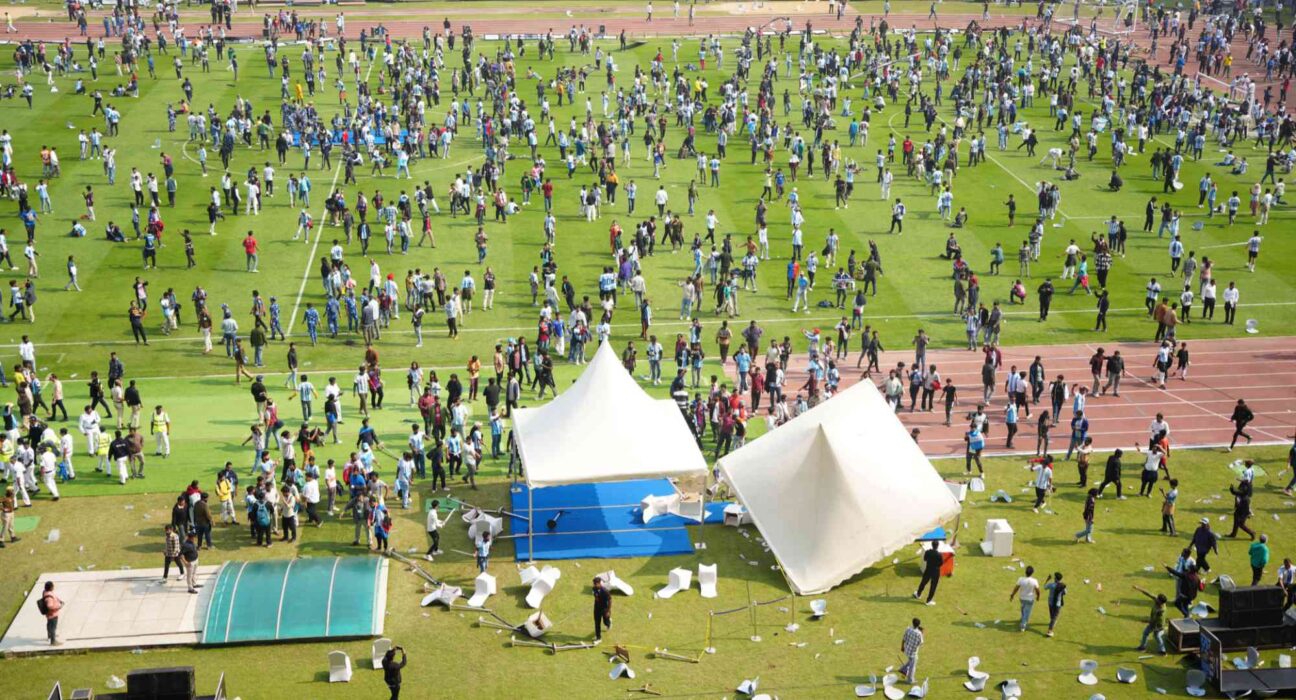
The Lionel Messi Kolkata chaos was not an unfortunate one-off or a case of bad luck. It was inevitable. What unfolded at Salt Lake Stadium, Kolkata during the GOAT India Tour 2025 was the direct outcome of a broken sporting ecosystem that prioritizes spectacle over substance and celebrity over structure.
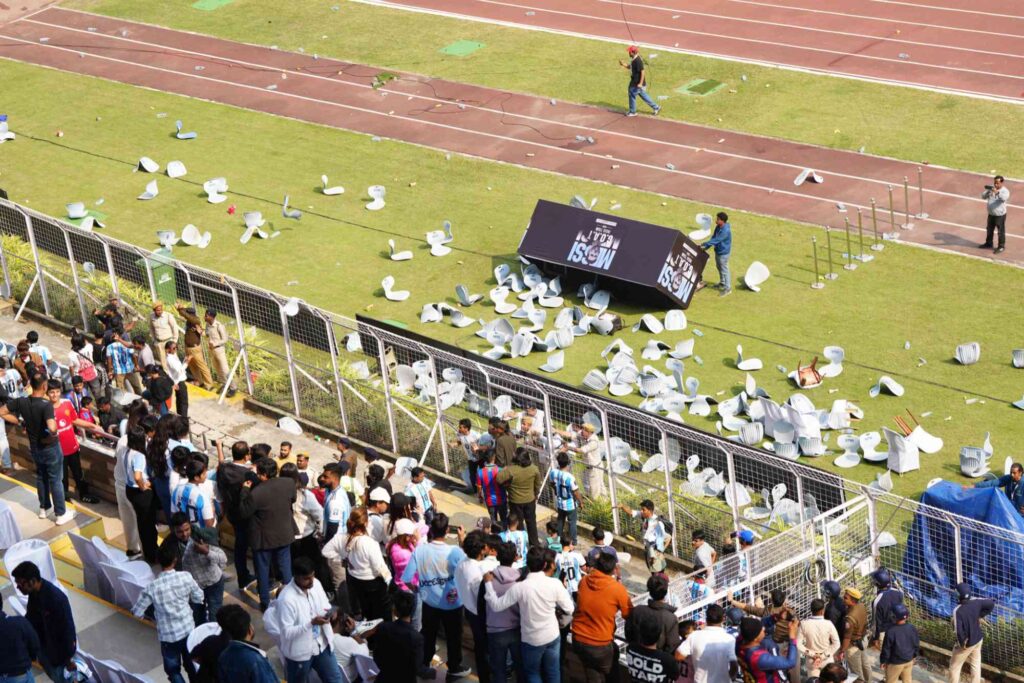
Thousands of fans arrived before sunrise, many paying premium prices that far exceeded the average matchday cost in Indian football. What they received was a fleeting glimpse of Lionel Messi, an early exit, and a complete breakdown of order. Bottles thrown, posters torn, seating damaged — not because fans are unruly, but because expectations were sold irresponsibly.
This was not football. This was theatre without a script.
When Star Power Exposes Weak Foundations
Messi’s presence should have been a celebration — a rare moment capable of inspiring young footballers and drawing global attention to India’s untapped football culture. Instead, it exposed how unprepared Indian football is to handle its own passion.
The Lionel Messi Kolkata chaos revealed a familiar pattern: poor planning, excessive VIP culture, unclear communication, and total disregard for the paying supporter. Fans were packed into stands while dignitaries crowded pitch side. Visibility was restricted, engagement was minimal, and the event collapsed under the weight of its own hype.
When Messi exited early for safety reasons, the illusion shattered.
Accountability Came Late — Damage Was Already Done
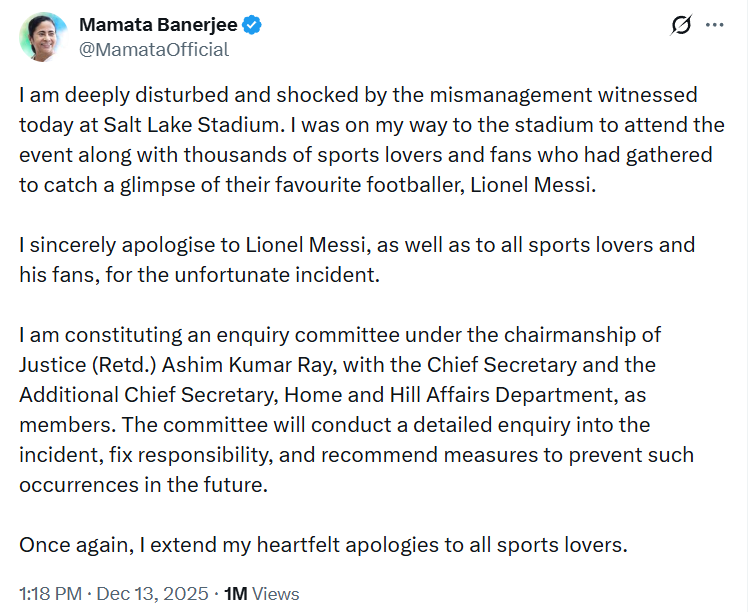
The detention of organiser Satadru Dutta and the promise of refunds were necessary, but reactive. Accountability after chaos does little to restore trust. A government inquiry may identify mismanagement, but the deeper issue runs far beyond one organiser or one event.
Indian football has normalised mediocrity in execution while charging elite prices for access. That contradiction is unsustainable.
The Bigger Truth: Indian Football Is in Its Darkest Phase
Strip away the Messi headlines and a harsher truth emerges. Indian football is going through one of its bleakest periods.
Domestic leagues struggle for stability. Grassroots systems remain underfunded. Youth development pathways are fragmented. Clubs depend heavily on short-term sponsors rather than long-term planning. And yet, when a global icon visits, money appears instantly — not for football development, but for a one-day spectacle.
This is not growth. It is distraction.
Why Messi’s Visit Still Mattered — And Why It Was Squandered
Let this be clear: Messi coming to India was not the problem. Events like these can inspire a generation, bring global credibility, and create momentum — if handled with professionalism and purpose.
But inspiration without infrastructure fades quickly.
The resources poured into the GOAT India Tour could have funded coaching programmes, upgraded training facilities, supported women’s football, or strengthened youth leagues across multiple states. Instead, it vanished into an event that offered little football and even less legacy.
The Lionel Messi Kolkata Chaos Must Be a Turning Point
If Indian football learns nothing from this episode, it deserves to remain where it is.
The Lionel Messi Kolkata chaos should force administrators, organisers, and stakeholders to confront uncomfortable questions:
- Why are fans treated as consumers, not participants?
- Why is crowd management still an afterthought?
- Why does celebrity access matter more than football access?
Indian football does not need more statues, grand unveilings, or red-carpet moments. It needs governance, planning, and respect for the supporter who keeps showing up — even when the system repeatedly fails them.
Until that changes, events like this will keep happening. And every time they do, the distance between Indian football’s potential and its reality will only grow wider.
Read more about Indian Football